Éléonore de Bourran has been a VSI in Thailand since January 2026, engaged in a mission as an animation and teaching officer with the Foreign Missions of Paris. Based in the north of the country, she teaches English every morning in local schools and leads workshops in the evenings with the village children. Between the "wai" addressed to the teachers, the ceremonies where students bow down, and the days when play becomes the best tool for learning to read and write, she tells us what this immersion has taught her..
Tell us about your mission!
On assignment in Northern Thailand, we are two volunteers who teach English in various schools in the region every morning. We also run English workshops every evening for the children in our village. Since Thai is only spoken in Thailand, learning English is essential for those who want to find work in an international company or in the tourism industry.
The Thai education system… very different from the French education system?
Children are taught responsibility for cleanliness and respect from a very young age. This is reflected in the morning gathering, the waï to greet teachers or other students, the uniform, the dishes from their own plate, brushing their teeth after meals or even cleaning their classroom.
In terms of learning, it often depends on the schools. Some schools ensure the progress of all students, while in others, students can go half-days without seeing a teacher.
Access to school is possible for the vast majority of children, whether in schools for Thai children or in the learning center for the Burmese. But in some of the more remote villages, students leave school around the age of 12 to work and get married.
What particularly surprised you during your mission?
Physical contact is much more prevalent than in France, whether it's a hand on the shoulder or a gentle tug on the ear. In preschool, teachers are very close to their students. In elementary and middle school, the teacher is truly an authority figure, but in high school, relationships are very friendly.
I was particularly struck by the contrast between classroom discipline, which can be challenging, and official ceremonies where students are impeccable. During the teacher day For example, students bring flowers to their teachers and prostrate themselves before them until they reach the ground.
Can you recommend an educational method that has worked particularly well with your students?
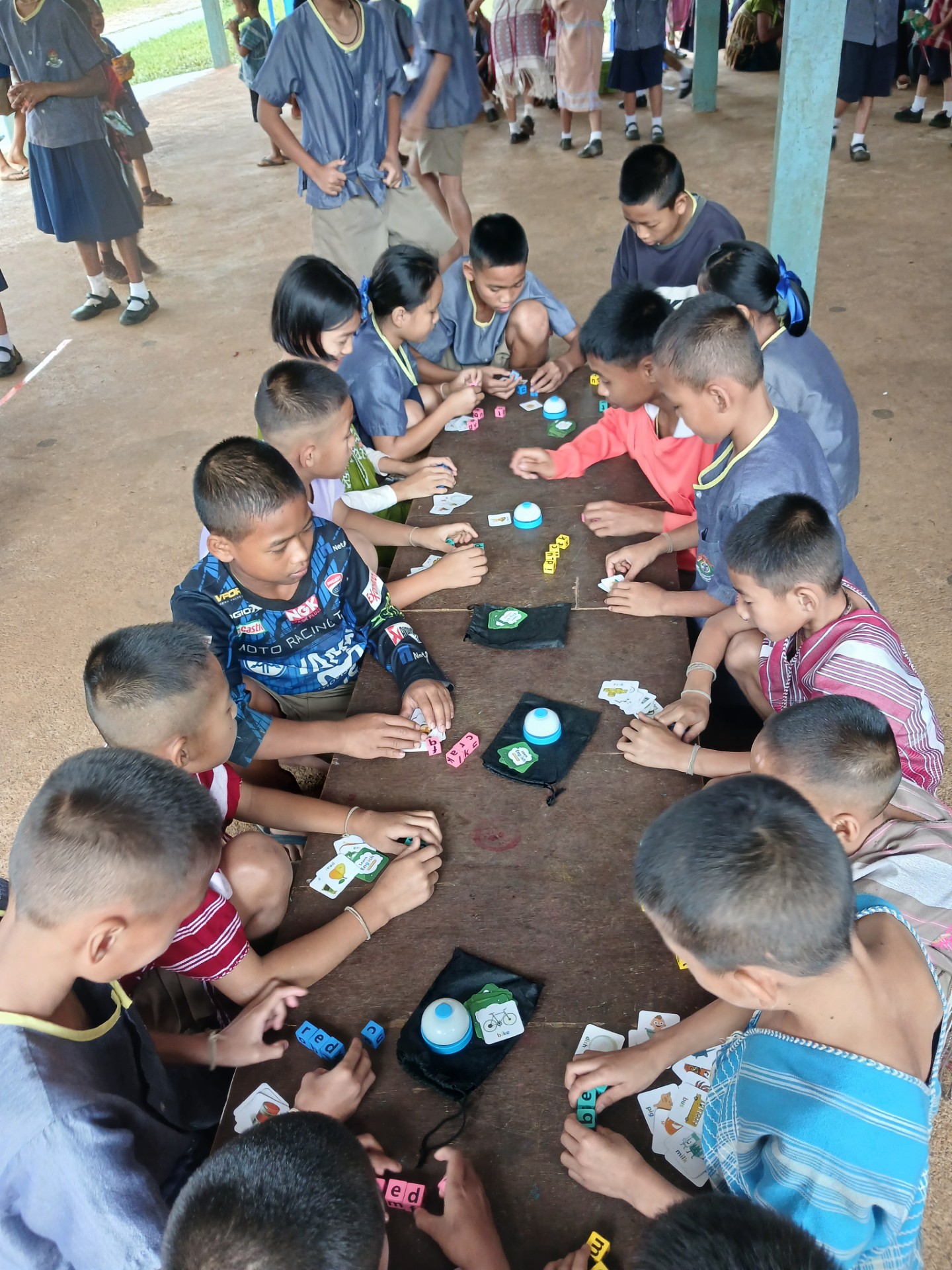
Games are an essential tool for practicing English, especially since speaking up isn't always easy in this cultural context. The Thai system is based on repetition, making it difficult for students to formulate sentences they've created themselves.
We chose to focus on reading and writing, which are essential for being able to review written lessons in their notebooks. The students are used to having phonetics written out in Thai, so reading our alphabet isn't always easy. We therefore use gestures, songs, key words, and then workshops or team games at the board to allow them to practice writing what they hear or reading what they see.
And finally, a memorable anecdote?
I will always remember Salopon and his pride when he was able to answer a question. This unruly student, whom we didn't think we could engage, simply needed to be seen as an individual and gradually brought up to the level of the others. Praised for each of his small victories, he became a driving force in the class.